
5 play-based activities that use paper bag.
Shop paper bag on AmazonAs an Amazon Associate, OTPlan earns from qualifying purchases.


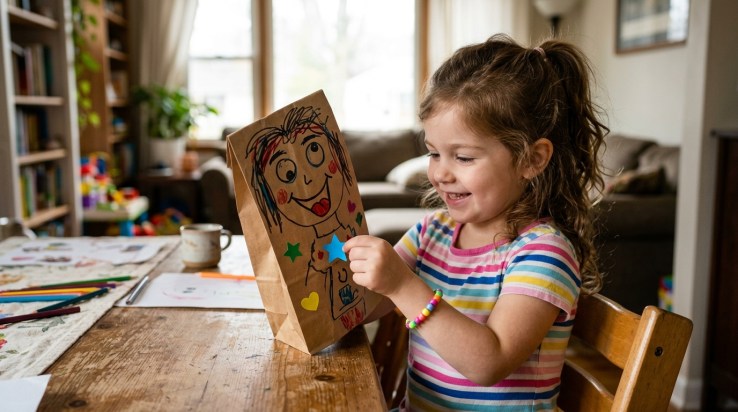 Added Aug 29 · Ages 1 to 5Sticker Puppet RescueBilateral Hand UsePincer ControlYou'll need: Markers · Paper Bag · Stickers
 Added Aug 25 · Ages 3+Pincer Mask MakerCuttingPincer GraspVisual MotorYou'll need: Beans · Glue · Paper Bag · Scissors · Sequins
 Added Mar 25 · Ages 3+Newspaper DanceCore StrengthIdeationMotor PlanningYou'll need: Construction Paper · Masking Tape · Newspaper · Paper · Paper Bag
 Added Mar 16 · Ages 3 to 5Paper Bag FishBilateral Hand UseCuttingFinger StrengthGrasp+4 moreYou'll need: Construction Paper · Cotton Balls · Crayons · Glue · Markers · Newspaper · Paint Brush · Paper Bag · Ribbon · Scissors · Sponge · Tempera Paint · Wiggle Eyes · Yarn
 Added Nov 13 · Ages 3+Textured Paper PaintingBilateral Hand UseCuttingFine Motor ControlFinger Strength+5 moreYou'll need: Finger Paint · Markers · Paint Brush · Paper Bag · Squirt Bottle · Tempera Paint
While these activities are great for home practice, nothing replaces the guidance of a licensed therapist. If you are in Irvine, CA or the Orange County area and have concerns about your child's development, we invite you to connect with us.
Contact Tumble N' Dots Therapy →